What are Amazon’s FBA Services?
FBA stands for “Fulfillment By Amazon.” In today’s globalized world, businesses need to find multiple ways to reach their customers. For many, that means incorporating fulfillment services like Amazon’s into their sales strategies. Effectively using FBA services generally requires sellers to ship their products to Amazon warehouses for fulfillment. Over the past several years, Amazon has been aggressively building new fulfillment centers around the United States in order to improve shipping speeds to satisfy impatient consumers. What does this mean for individual FBA sellers? It means that when a business ships products to Amazon using its FBA service, it will have “consignment inventory” stored in one or more of the states where Amazon has fulfillment centers. In this case, the logistical details matter. This is because Amazon does not actually purchase its sellers’ products. Rather, Amazon’s fulfillment services are used to facilitate online sales to consumers around the world, who are the real customers.
Nexus, Physical Presence and Sales Logistics
Nexus is a term used to indicate a connection between a taxpayer and a state or local taxing authority. When substantial nexus exists, the taxing authority is allowed to impose taxes. Physical presence means having tangible property or people located within a state; this has long been considered to provide a substantial connection for nexus purposes. The management of sales logistics can impact state taxes because inventory is a form of tangible property that may create physical presence within a state. While each state’s tax laws vary, most do not distinguish between inventory stored directly by sellers and consigned inventory held by fulfillment centers when considering nexus rules.
BIG Changes to Old Nexus Protections
Many businesses, especially manufacturers and distributors, have long enjoyed protection from state income tax nexus when their out-of-state physical presence is limited to salespersons. This protection is broadly applicable to all states because it’s provided by federal law (Public Law 86-272). However, tangible property located within out-of-state Amazon fulfillment centers is not protected by federal law and could cause your business’s P.L. 86-272 protection to become ineffective.
Physical Presence Just Became More Complex
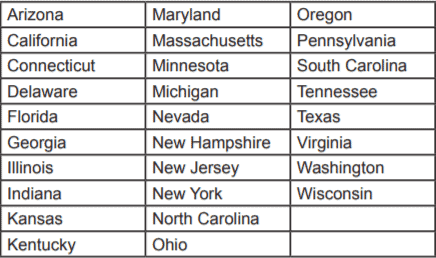
Amazon’s website currently indicates having fulfillment centers located in twenty eight states, as follows:
Inventory Tracking
Amazon provides online tools to monitor inventory location. These tools allow tracking of your inventory at specific fulfillment centers to determine where your consigned inventory is held. Businesses should track their consigned FBA inventory to make informed decisions about nexus and where to file state tax returns. This is especially important because Amazon, not FBA sellers, will decide where to store inventory and changes can occur at any time.
Sales Tax Impact
On the sales tax front, remember that Amazon will not automatically manage sellers’ sales tax obligations. While Amazon may play a role in collecting sales tax, FBA sellers are required to decide “if, when and where” their individual businesses have filing requirements. Sellers are required to specifically instruct Amazon to collect sales tax using online tools. This leaves individual sellers to both register and file sales tax returns on their own. Lastly, don’t forget to combine sales and use tax data from both FBA sales and non-FBA sales before filing returns.
Income Tax Impact
While sales tax nexus and income tax nexus are often different, physical presence can certainly trigger income tax nexus as well. There are usually other considerations when making comprehensive nexus decisions, but tracking inventory location certainly plays a big part. It’s also important to remember that filing sales tax returns without filing income tax returns may trigger notices and nexus questionnaires from the states. In this digital age, states are sharing information between departments much more effectively.
Boulay Can Help
Remember that Boulay offers state and local tax (SALT) consulting services to help identify and quantify sales tax and income tax nexus and filing requirements for all state taxes.